Frequently Asked Questions
The most-asked questions about islands.
What does the term 'islands' actually cover as a subject?
Islands are any landmasses fully encircled by water, spanning from a few-meter sandbars to continent-scale land like Madagascar or New Zealand. The topic weaves together geology, ecology, human settlement, and cultural history into one interconnected field.
Who are the 'main characters' — the islands people reference most?
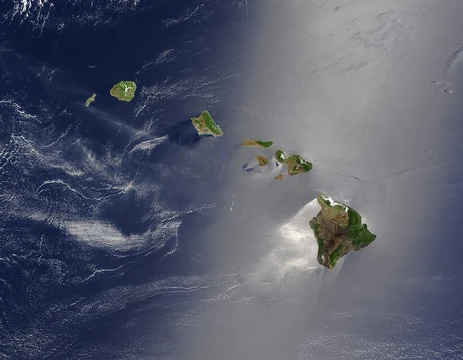
Madagascar, Iceland, and New Zealand are the heavyweights that anchor most conversations, while smaller names like Easter Island, Sri Lanka, and the Galápagos punch far above their physical size in cultural weight. In the Pacific, the Hawaiian archipelago remains a perennial favorite in popular imagination.
Where should a total newcomer begin exploring island geography?
Start by mapping the four great archipelago clusters — the Indonesian-Malay chain, the Caribbean, the broad Pacific, and the North Atlantic — to build a mental skeleton. Then pick a single island and read about one geological feature and one species or culture to give yourself a concrete anchor point.
How many islands exist in the world?
The count shifts with the minimum-area threshold, but most estimates settle between 80,000 and 100,000 landmasses above a given size. If you include every seasonal sandbar and tiny islet, some tallies push past 200,000.
What is the single most important geological fact about islands?
Nearly every island is a fragment of a larger tectonic story — a volcanic hotspot, a rifted continental edge, or coral accretion on a submerged platform. Identifying which mechanism built a particular island explains its shape, soil depth, and even its unique biodiversity.
What are some of the most 'notable moments' in island history?
The 1883 Krakatoa eruption reshaped global climate records, the 1963 volcanic birth of Surtsey off Iceland gave scientists a real-time laboratory, and Darwin's 1835 Galápagos visit seeded the theory of evolution. More recently, the 2018 Kīlauea eruption drew worldwide attention to how active island geology remains.
Why are island ecosystems so different from mainland ones?
Prolonged isolation drives rapid speciation, so a single island can host species that exist nowhere else on the planet. The frequent absence of large predators often produces flightless birds, giant tortoises, or unusually bold animal behavior that would be maladaptive on a continent.
What's the difference between an island, an atoll, and an islet?
An island is any above-water land area surrounded by sea; an atoll is a ring-shaped coral reef enclosing a lagoon with no central high point; an islet is simply a very small island, often only a few hectares. The terms overlap in casual speech but carry distinct geological meanings.
Are all islands inhabited by people?
No — the overwhelming majority of the world's islands are completely unpopulated, especially tiny rock outcrops in the Arctic, the Southern Ocean, and the deep Pacific. Of the roughly 80,000-plus recognized islands, only a few thousand support permanent human communities.
What's a common misconception about islands?
Many people picture islands as static, permanent features, but they are constantly being built, eroded, or submerged by tectonic and oceanic forces. Some, like Surtsey or the ephemeral sandbanks of the Bay of Bengal, appeared or vanished within a single human lifetime.